Here is the short answer: unicellular organisms grow by getting bigger and then splitting into new organisms, so their "growth" is really reproduction. Multicellular organisms grow by adding more cells to an already-existing body, with those cells specializing into tissues and organs, see <a>how does a multicellular organism grow</a> for the full explanation. The mechanisms are fundamentally different, the constraints that stop growth are different, and the signals involved are completely different. If you want to tell them apart, look at whether the organism increases in cell number within a single body (multicellular) or whether the population count climbs because cells keep dividing into new individuals (unicellular). Everything else follows from that distinction. how does a one celled organism grow
Contrast Unicellular and Multicellular Growth Mechanisms
What "growth" actually means in each case
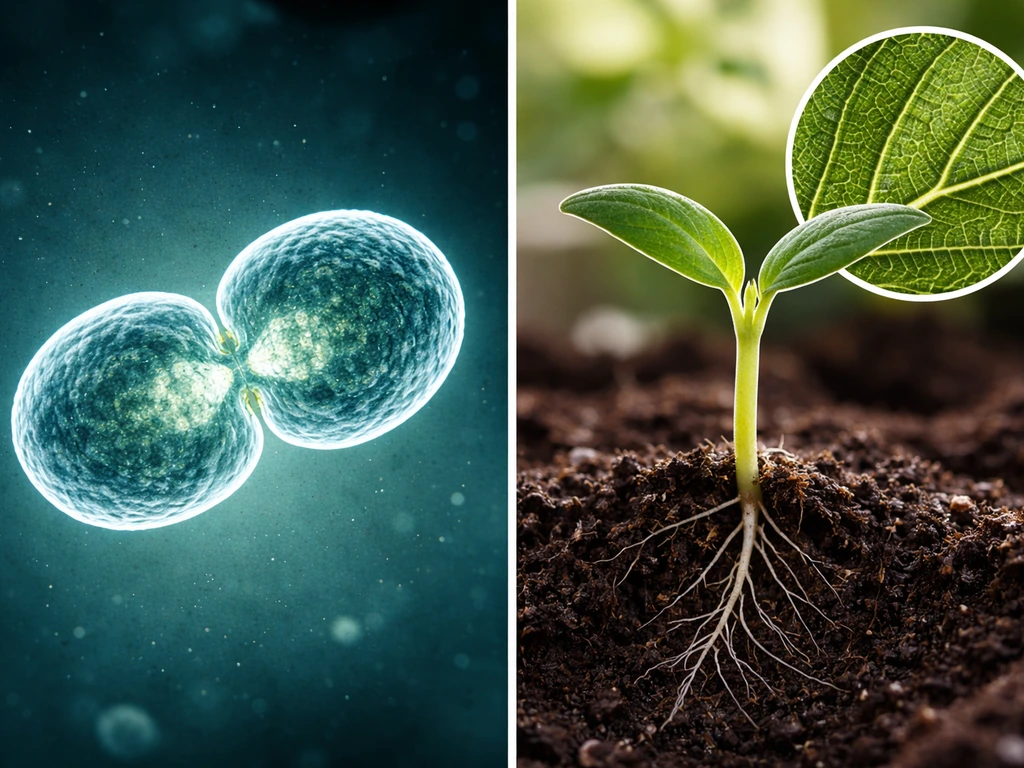
Growth sounds like one idea, but it covers two genuinely different things depending on who is doing the growing. In a unicellular organism like a bacterium or a yeast cell, growth means an increase in total cell mass: more cytoplasm, more ribosomes, a larger nucleus, more membrane. That is cell growth in the strict sense. But here is the thing: a single bacterium cannot keep expanding forever. At some point it divides, and when it does, that division event is simultaneously the organism reproducing. The "organism" does not get bigger in any lasting way; instead, there are now two organisms where one existed before. So when biologists talk about unicellular growth in a population context, they usually mean population growth, measured by cell counts over time, which connects to how do organisms grow in practice.
In a multicellular organism like a tree, a frog, or you, growth means something different: new cells are added to an existing body and stay there. The organism itself gets bigger. Cell division is still the engine, but the daughter cells do not leave and become independent; they stick around, differentiate into specialized cell types, and contribute to tissues and organs. A multicellular organism can therefore grow in ways a single bacterium simply cannot, because it is building a structure, not just copying itself.
How unicellular organisms actually grow
The two-phase cycle: get bigger, then split
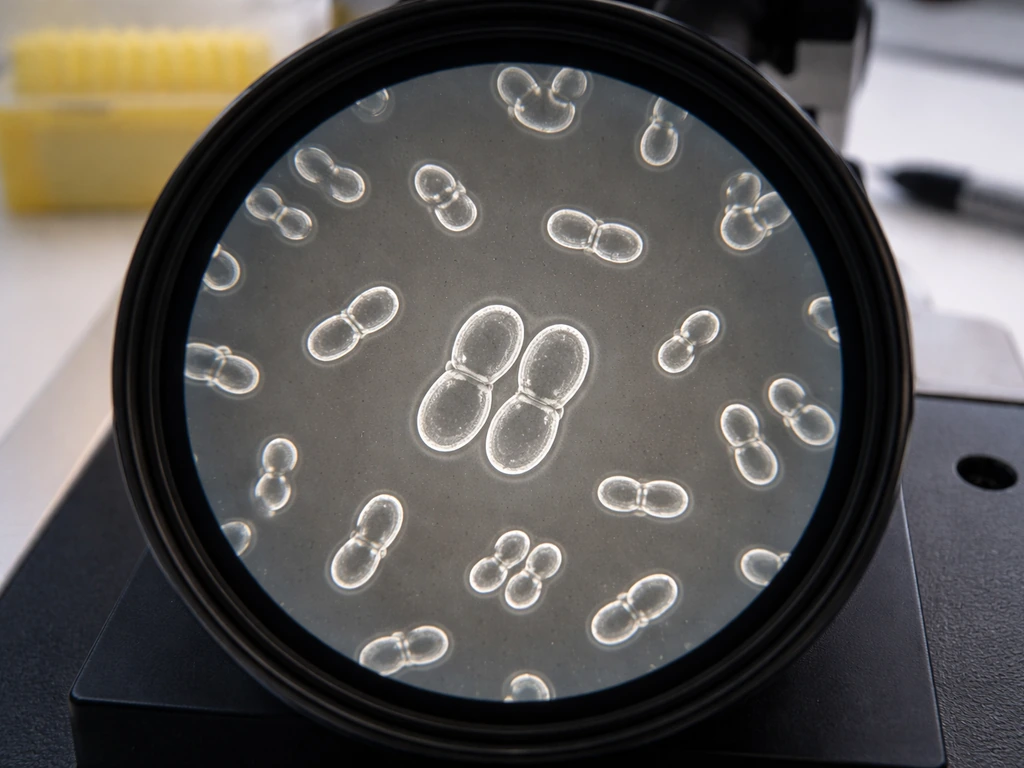
A bacterium like E. coli spends most of its time accumulating mass. Nutrients come in, ribosomes synthesize proteins, the chromosome replicates, and the cell slowly doubles its contents. This mass-accumulation phase is often roughly exponential: the more ribosomes you have, the faster you can make more ribosomes. Once enough mass is accumulated and chromosome replication finishes, the cell divides. The Cooper-Helmstetter model describes this beautifully: there is a C-period (the time it takes to replicate the chromosome from start to finish) and a D-period (the gap between finishing replication and physically dividing). Together, C plus D sets the minimum time between divisions. Under fast growth conditions, bacteria actually start replicating a new round of DNA before the previous round is finished, which is how a population can double faster than it takes to copy the genome once.
Yeast adds another layer of elegance. Budding yeast uses a size checkpoint called Start (the G1/S checkpoint) to decide whether the cell is large enough to commit to division. The key players are a cyclin called Cln3 and an inhibitor called Whi5. As the cell grows in G1, Whi5 gets diluted relative to the increasing cell volume, and eventually the Cln3-to-Whi5 balance tips, triggering Start. Cells that grow faster reach this tipping point sooner and tend to be larger at division. In rich media at 30°C, wild-type yeast double in about 90 minutes. In poor conditions, that number climbs steeply, and once nutrients are exhausted the population enters stationary phase where division rate and death rate roughly balance.
The adder, the sizer, and the timer
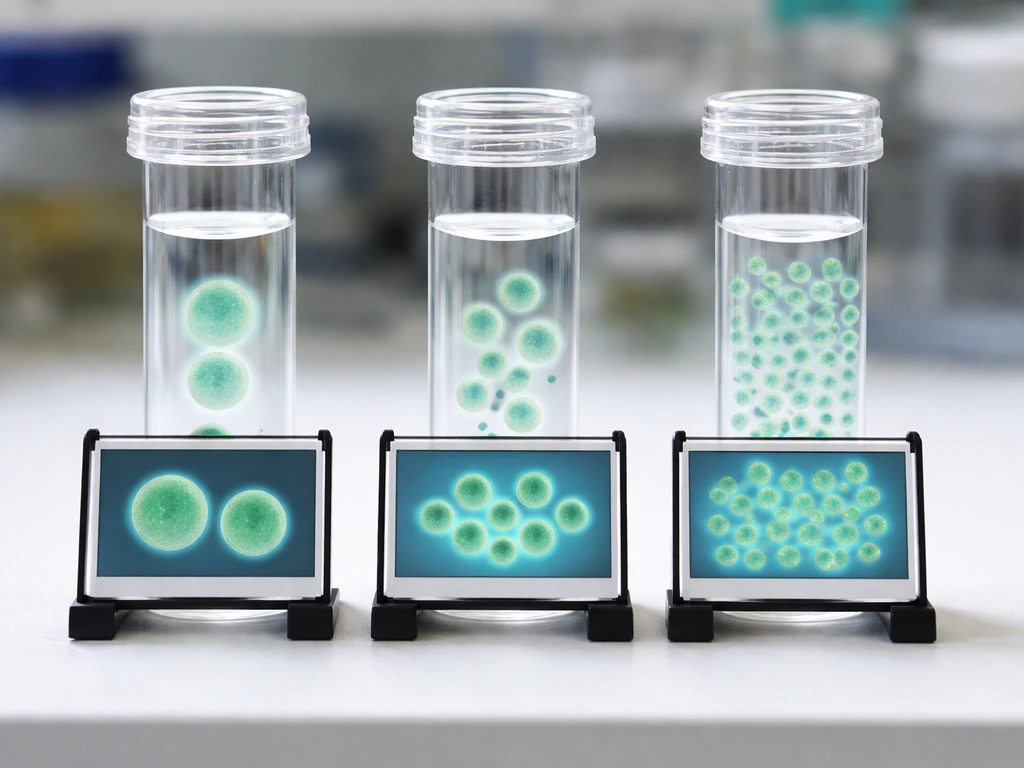
Researchers studying single-cell growth have worked out three conceptual models for how cells decide when to divide. A "sizer" divides when it hits a fixed size threshold. A "timer" divides after a fixed time interval. An "adder" adds a roughly constant amount of volume between birth and division, regardless of how big it was at birth. Real bacteria like E. coli seem to behave most like adders, which keeps cell size from drifting too large or too small over generations. Fission yeast grows approximately exponentially in length, but careful measurements show the growth pattern shifts within the cycle, including a phase where length stays nearly constant as division completes. None of these organisms uses a single clean rule; real cells integrate multiple signals and show mixed behavior across conditions.
How multicellular organisms grow
Division plus differentiation: the two things unicellular growth never needs
Multicellular organisms do use cell division, but the story does not end there. When a human embryo grows, cells divide and then commit to becoming specific cell types: muscle, neuron, epithelium, bone. This is differentiation, and it is something a bacterium never has to deal with. Differentiation is irreversible in most cases. Once a cell has become a mature neuron, it will not go back to being a stem cell and start dividing freely again. This commitment is enforced by gene expression programs that switch on and off in response to signals from neighboring cells and from the chemical environment.
The result is tissue organization. Groups of differentiated cells form layers, tubes, sheets, and organs, each with specific geometry that serves a function. A multicellular organism growing from a single fertilized egg must not only increase its cell count but also get the spatial arrangement right, which requires coordinating when and where cells divide, and when they stop dividing and specialize. That coordination is the hard part, and it is what sets multicellular growth apart from anything a single-celled organism does.
Plants grow differently from animals, but the logic is the same
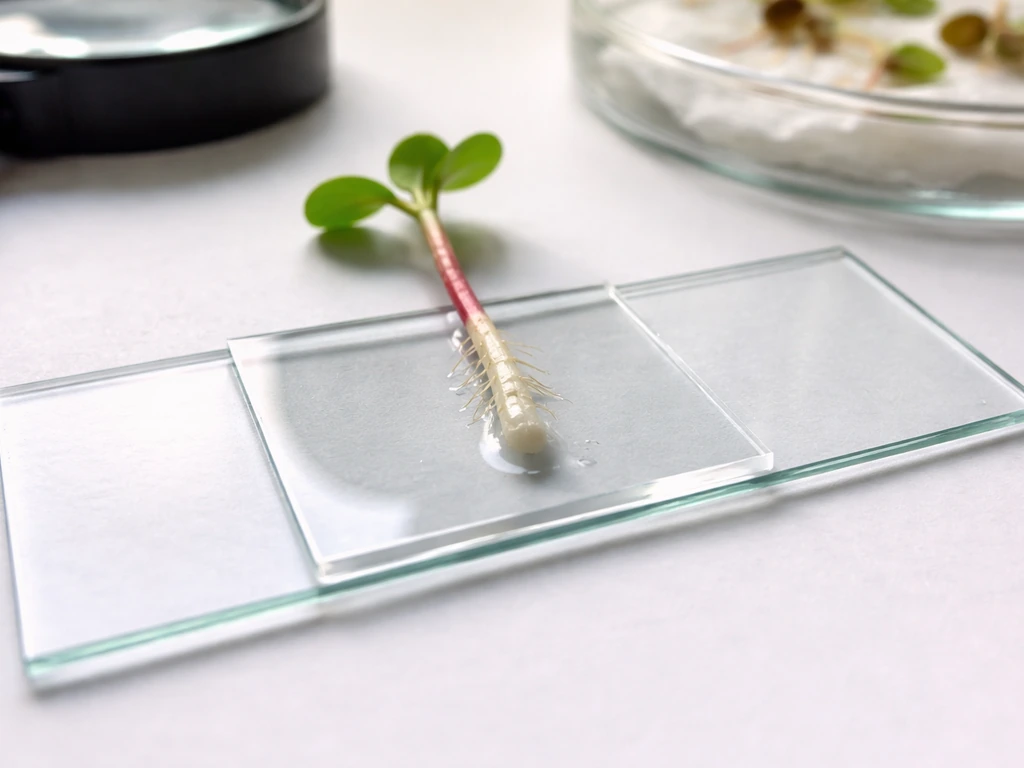
In plants, most growth happens at meristems: dedicated zones of dividing, undifferentiated cells at root tips and shoot tips. The hormone cytokinin sustains the undifferentiated meristematic zone at the center, while auxin promotes expansion and growth in surrounding regions. These two hormones effectively create a spatial boundary between "keep dividing" and "start differentiating and expanding." Gibberellins drive cell elongation (think of how a seedling bolts upward), while abscisic acid can pause growth under stress. The interplay of these signals means a plant's growth program is responsive and conditional in ways that are qualitatively similar to animal development, even though the cellular machinery is different.
What actually stops growth from going on forever
The surface-area-to-volume problem for single cells
Here is the core physics that limits how big a single cell can get. As a cell expands, its volume grows with the cube of its radius, but its surface area only grows with the square. For a sphere, the ratio of surface area to volume equals 3 divided by the radius. Double the radius and that ratio gets cut in half. That matters because the cell's surface is where nutrients come in and waste goes out. A bigger cell has more volume demanding resources but proportionally less membrane to supply them. Eventually, diffusion just cannot keep up: oxygen, glucose, and other molecules cannot reach the cell's interior fast enough, and waste builds up. This is why bacteria stay small (typically 1 to 10 micrometers) and why even the largest single cells in nature have structural tricks, like being very flat or having large central vacuoles, to keep diffusion distances short.
Transport limits in multicellular tissues
Multicellular organisms partially solve the surface-area problem by building circulatory and respiratory systems that bring resources directly to cells deep inside the body. But even those systems have limits. In tissue without a blood supply, oxygen can only diffuse about 200 micrometers before it runs out. Tumor spheroids used in laboratory research hit this wall visibly: the outer shell of cells proliferates normally, but the core becomes hypoxic and eventually necrotic. This 200-micrometer diffusion limit is not just a cancer biology curiosity; it is a fundamental constraint on how thick any living tissue can be without a dedicated supply network.
Checkpoints, signals, and the brakes on cell division
Multicellular organisms also use molecular brakes to stop cells from dividing when they should not. Cell cycle checkpoints at G1/S and G2/M assess whether DNA is intact and whether the environment supports division. Signaling pathways like Wnt and FGF set up spatial domains: Wnt gradients coordinate proliferation with differentiation across many cell lengths, while FGF can restrict differentiation and keep cells proliferating within the range of its diffusion. Cells outside the FGF signal range exit the cell cycle and differentiate. When these brakes fail, you get cancer: cells that ignore anti-growth signals, evade the checkpoints, sustain uncontrolled division, and eventually induce new blood vessel growth to feed the expanding mass.
How conditions shape growth outcomes
Growth in any organism is conditional. Remove a key resource and growth stalls, slows, or stops. The mechanisms differ between unicellular and multicellular organisms, but the dependency is universal.
| Condition | Unicellular response | Multicellular response |
|---|---|---|
| Nutrient depletion | Division slows; cells enter stationary phase; exponential growth becomes linear or flat | Growth zones slow; resource is reallocated; development may pause or reorganize |
| Low oxygen | Anaerobic metabolism kicks in; growth rate drops; cell size may change | Tissues beyond ~200 μm from supply become hypoxic; necrosis in poorly vascularized areas |
| Low temperature | Membrane fluidity drops; enzyme rates slow; doubling time lengthens substantially | Metabolic rates slow; developmental timing stretches; some organisms enter dormancy |
| Limited water | Osmotic stress; turgor pressure drops; division slows or halts | Plants wilt and close stomata; growth hormones like ABA signal stress; cell expansion halts |
| Limited space | Density-dependent growth slowing; waste accumulation; competition for nutrients | Contact inhibition (in animals); meristem activity constrained by physical pressure (in plants) |
A zinc-limitation experiment illustrates the unicellular version cleanly. When yeast cells are shifted from normal media to low-zinc conditions, population growth changes from exponential to roughly linear. The cells keep dividing but cannot sustain the compounding acceleration of exponential growth because the limiting resource cannot keep pace with demand. This kind of experiment is a direct window into how tightly cell division is coupled to environmental supply, and it is something you can replicate with basic lab equipment.
For multicellular organisms, the environmental dependency shows up differently. A plant grown in low light will divert resources toward elongating stems at the expense of building leaves, a strategy called etiolation. An animal embryo developing at the wrong temperature may survive but show developmental defects that reflect altered timing of cell division and differentiation events. Conditions do not just change the rate of growth; in multicellular organisms they can change the pattern of growth entirely.
How multicellular organisms coordinate growth across the whole body
This is the part that has no parallel in unicellular biology, and it is worth spending real time on. A multicellular organism faces a coordination problem that a bacterium never encounters: how do cells in one part of the body know what cells far away are doing, and how do they adjust their division and differentiation behavior accordingly?
The answer, broadly, is morphogen gradients and feedback signaling. Morphogens are signaling molecules that spread outward from a source, forming a concentration gradient across a tissue. Cells read the local concentration and respond with different gene expression programs. In the Drosophila wing, a morphogen called Dpp spreads along the anterior-posterior axis. Above a certain concentration threshold, Dpp promotes growth; the concentration gradient simultaneously specifies where different structures like wing veins will form. Growth and patterning use the same gradient but respond to it differently. This is a beautiful example of how a single signal can do two jobs at once.
Morphogen gradients can emerge from relatively simple rules: a molecule is produced at a localized source, diffuses outward, and degrades at a uniform rate. Reaction-diffusion models formalize this mathematically, and they predict the kinds of stable, reproducible patterns we actually see in developing embryos. The Wnt pathway is another well-studied example: Wnt gradients coordinate proliferation with differentiation across tissues, and when Wnt and FGF signaling interact (as in zebrafish lateral line development), the integrated output determines whether cells divide or specialize.
There is also lateral inhibition, a mechanism used to create sharp boundaries between cell fates. In the Notch-Delta system, a cell that begins differentiating down one path signals its neighbors to stay in a different state. This mutual inhibition propagates across a tissue and locks in a stable, checkerboard-like or boundary-forming pattern. It is a completely different logic from anything in unicellular biology, where each cell makes its own decisions based on its own internal state and immediate environment.
Plants use a hormonal version of this coordination. Auxin moving down from shoot tips promotes elongation and can suppress branching in lower zones (apical dominance). Cytokinin moving up from roots promotes cell division. The balance between the two, along with gibberellins, ethylene, and abscisic acid, produces a coordinated whole-plant growth pattern that responds to light, gravity, damage, and nutrient status. The plant is integrating dozens of signals simultaneously to produce coherent growth.
Unicellular vs multicellular growth: side-by-side comparison
| Feature | Unicellular (e.g., bacteria, yeast) | Multicellular (e.g., animals, plants) |
|---|---|---|
| What increases during growth | Cell mass, then cell number (via division = reproduction) | Cell number within one body, plus cell size in some zones |
| Role of cell division | Division = reproduction; produces new organisms | Division = body growth; daughter cells stay in the organism |
| Differentiation required? | No; all offspring are genetically identical whole organisms | Yes; cells specialize into distinct types and tissues |
| Tissue/organ formation | Not applicable | Core feature; growth produces organized structures |
| Primary size constraint | Surface-area-to-volume ratio; diffusion limits for nutrients/waste | Transport networks (circulatory/vascular); signaling checkpoints; O2 diffusion limit (~200 μm) |
| Growth control mechanism | TOR/PKA nutrient sensing; size checkpoints (Start/Whi5); adder/sizer/timer rules | Morphogen gradients; checkpoint signaling; hormones; contact inhibition |
| Response to nutrient depletion | Stationary phase; exponential growth stops | Growth pauses; development may shift; resource reallocation |
| What unchecked growth looks like | Exponential population explosion until resources run out | Cancer: loss of checkpoints, uncontrolled division, tissue invasion |
| How to measure growth | Cell counts over time; OD600 for bacterial cultures; growth curve phases | Organism size; organ mass; cell counts in tissues; differentiation markers |
Practical ways to visualize and model the differences

If you are a student trying to make these ideas stick, or an educator building a lesson, here are concrete ways to turn the abstract into the visible.
Model the surface-area-to-volume limit
Take three cubes: side lengths 1, 2, and 4 centimeters (or use paper cutouts). Calculate surface area (6 times side squared) and volume (side cubed) for each. The SA:V ratios are 6, 3, and 1.5, respectively. Now ask: if nutrients can only enter through the surface, and every cubic centimeter of volume needs the same supply, which cube runs into trouble first? This simple model predicts why cells stay small, and it generalizes directly to the 200-micrometer oxygen diffusion limit in tissues.
Plot a bacterial growth curve and identify the phases
Grow a yeast or bacterial culture and measure optical density (OD600) every 30 to 60 minutes. Plot it on a log scale. You will see lag phase (cells adapting), exponential phase (constant doubling time, straight line on log scale), and stationary phase (plateau). Now shift a culture to a nutrient-limited condition mid-growth and watch the curve flatten or become linear. This directly demonstrates the zinc-limitation logic: growth mode changes based on resource availability, and the curve shape tells you which mode the organism is in.
Visualize morphogen gradients with a simple diffusion model
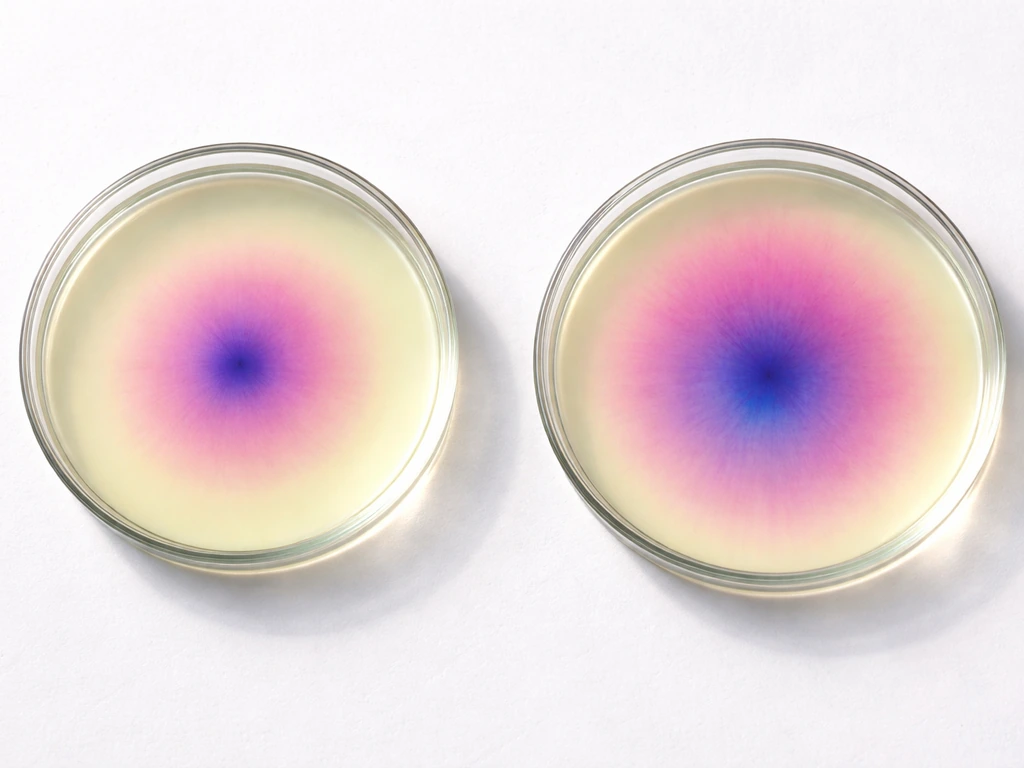
Drop a small amount of food coloring into the center of a petri dish with agar gel. Photograph it every 15 minutes. The spreading ring of color roughly mimics a morphogen gradient: high concentration near the source, decreasing outward. Now draw a threshold line: cells above this concentration divide (inner zone), cells below it differentiate (outer zone). This is the conceptual model behind FGF-controlled boundaries in developing tissues. It is also the logic of the Dpp gradient in Drosophila wings, just with gene expression outcomes instead of color.
Compare growth by cell count vs growth by organism size
This is the most direct way to tell unicellular and multicellular growth apart. For bacteria: count cells (or use OD600). The organism is the cell, so more cells means more organisms. For a plant seedling: measure stem length, leaf area, or dry mass over two weeks. Cell count is going up, but what you observe is one organism getting bigger. If you can add a staining step (like staining root tip cells and counting mitotic figures), you can see that growth in the seedling happens in specific zones, not everywhere at once. That spatial restriction of division is a hallmark of multicellular growth that you will never see in a flask of bacteria.
Next steps for going deeper
If you want to push further, these are the directions worth exploring. Understanding how individual cells divide and what governs the size of a single-celled organism ties directly into the question of whether unicellular organisms truly "grow" in the same sense we mean for whole bodies (a topic worth reading about separately). If multicellular growth is your focus, the mechanisms behind coordinated division, tissue patterning, and why multicellular organisms can reach the sizes they do all follow naturally from the signaling logic covered here. The relationship between growth rate, cell size, and nutrient availability in bacteria (especially how growth conditions change the C and D periods in the Cooper-Helmstetter framework) is a rich area for quantitative modeling if you enjoy the math side of biology.
The core insight to carry forward: in unicellular organisms, growth and reproduction are the same event, constrained by physics at the cell membrane. In multicellular organisms, growth is a coordinated program run by chemical signals across many cells, constrained by transport networks, developmental checkpoints, and the need to produce a functional body rather than just more cells. Both are elegant. Both have hard limits. And both become much clearer once you know what exactly to measure.
FAQ
Do multicellular organisms ever grow like unicellular organisms, by just getting bigger without much patterning?
Yes, some growth is comparatively uniform once a body plan exists. For example, during periods of rapid post-embryonic growth, many tissues add mass by increasing cell number and cell size in broad domains, even though differentiation remains coordinated. The key difference is that division still happens in regulated locations and phases, controlled by signals and checkpoints rather than by a single “always divide when ready” rule.
If unicellular “growth” is really reproduction, why do cells also increase in size before dividing?
Cell mass increases are real in unicellular organisms, but the functional organism-level outcome is still splitting into offspring. Size increase happens because the cell must replicate DNA and build enough components to survive division. In many species, the division decision uses size, time, or a volume-addition rule, so cells can be larger or smaller depending on growth conditions.
What happens to unicellular growth if nutrients are limited, does the cell stop dividing completely?
Often it slows or shifts growth mode rather than fully stopping immediately. Cells may continue dividing, but the population curve can stop showing exponential acceleration and transition toward linear growth or a plateau. Some nutrients limit specific biosynthetic steps first, causing lag in the cycle, so division becomes delayed even if cells remain viable.
Can multicellular growth occur without adding new cells, for example by enlarging existing cells?
Yes. Multicellular organisms can increase tissue size by cell expansion, especially during developmental or stress-related phases. However, expansion is still coordinated with differentiation and resource supply, and excessive expansion without appropriate growth signals can lead to cell cycle arrest or abnormal tissue architecture.
Why do embryos and tissues not outgrow the diffusion limits the way a larger single cell cannot?
Because tissues use geometry and supply networks to keep cells within an effective diffusion range, often by controlling thickness, vascularization timing, and local signaling. When diffusion becomes inadequate, cells become hypoxic, and that state triggers slowed proliferation, death, or altered differentiation, which effectively prevents unchecked expansion.
Do multicellular organisms always need circulation or lungs to transport nutrients and oxygen?
No. Before full circulatory systems mature (and in some smaller tissues), diffusion and local fluid transport can be sufficient, especially if tissues remain thin. In plants, transport is largely via vascular tissues that distribute solutes, and growth patterns are strongly shaped by where that transport is most effective.
How can I tell whether a given tissue growth pattern is “more division” or “more cell expansion”?
A practical approach is to measure both cell number and cell size over time in the same region. If tissue mass increases mainly with stable cell counts, expansion dominates; if counts rise with cell size staying similar, proliferation dominates. This distinction helps interpret growth-rate changes that might otherwise look identical from bulk measurements like total mass.
What are common mistakes students make when comparing unicellular and multicellular growth?
A common mistake is treating “growth” as the same measurable concept in both cases. For unicellular organisms, growth curves typically reflect population-level reproduction and the timing of cell division, while for multicellular organisms, growth includes spatial patterning, differentiation commitments, and tissue-level constraints. Another mistake is ignoring that division rate and differentiation can trade off depending on signaling thresholds and resource status.
Do plants follow the same cell cycle checkpoint logic as animals when deciding whether to divide?
They use cell-cycle control, but the upstream regulators and hormone inputs differ. Plants integrate signals like auxin and cytokinin to regulate whether cells remain meristematic and when they expand or differentiate. So the logic of checkpoints exists, but the “decision wiring” is hormonally and spatially organized differently than in animals.
How Does a One Celled Organism Grow and Divide?
Step-by-step how one-celled organisms grow to size limits, then divide via cell cycle, DNA replication, and nutrient upt